5 · Industrial Painting
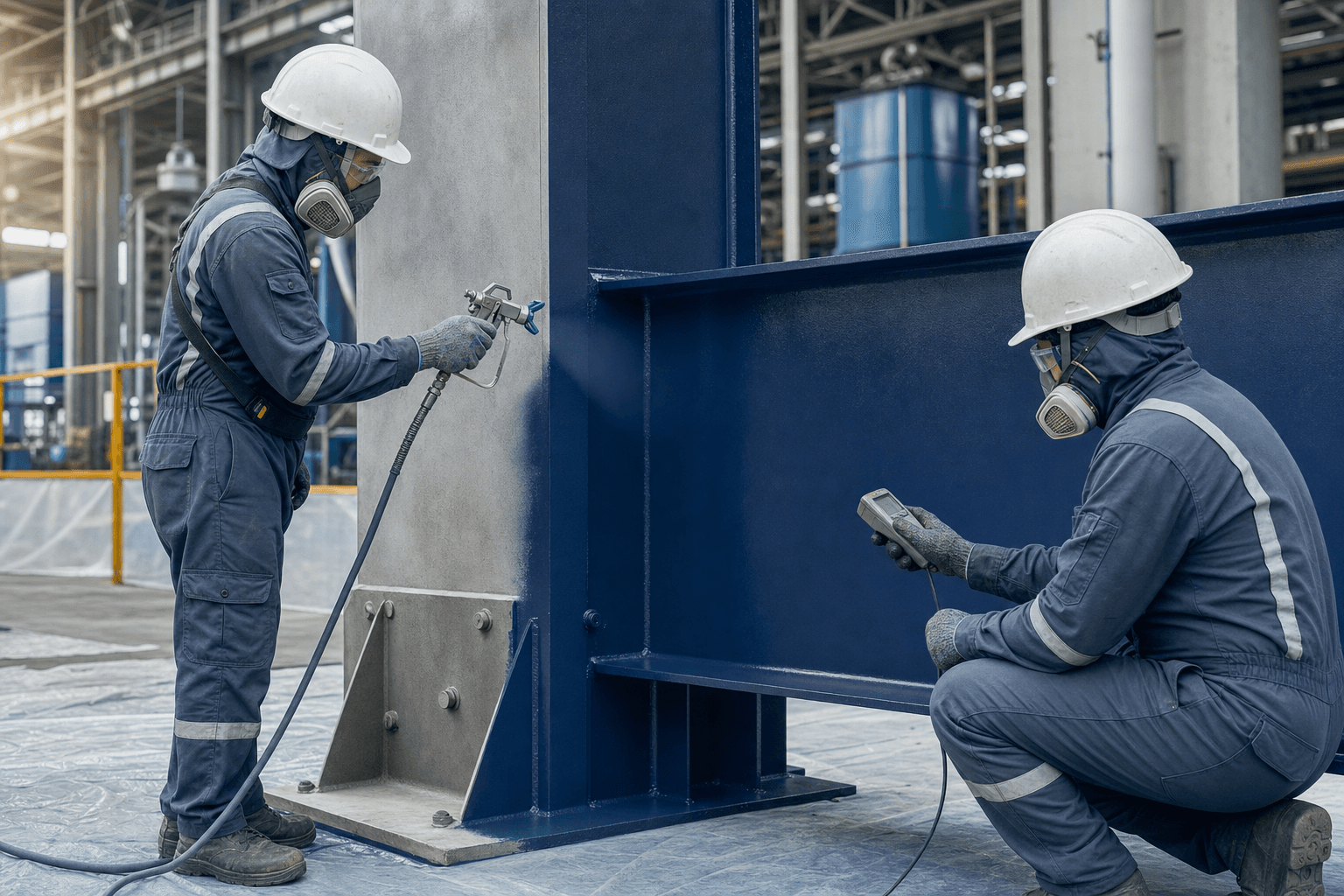
Industrial Painting and Protective Coating for Asset Protection
Coating systems that help protect steel, concrete, pipes, and utilities from corrosion, weather, heat, and industrial exposure.
2
When Industrial Painting is relevant
It may be considered when steel, concrete, pipes, structures, or utilities face corrosion, weather, heat, wear, or environmental exposure.
- Steel or assets show corrosion and coating deterioration
- Surfaces face weather or industrial environmental exposure
- A coating system needs renewal within an asset-maintenance scope
- A specialist protection requirement has been defined in the specification
3
Performance begins at the surface
Rust, contamination, existing coating, surface profile, difficult access, environmental conditions, and intercoat intervals influence the coating build-up.
4
System options
Anti-Corrosive Coating, Epoxy Paint Systems, weather-resistant coating, and Fire-Retardant Paint where specified are arranged around exposure requirements.
- 1
Anti-Corrosive Coating
What it is
A coating system that helps protect a relevant substrate from corrosion.
When it may be relevant
It may be considered for steel and assets with evaluated exposure.
Condition to confirm
Surface Preparation, environment, and coating build-up must suit the system.
- 2
Epoxy Paint Systems
What it is
Epoxy paint systems for suitable substrates and environments.
When it may be relevant
They may be used as part of a selected protective coating arrangement.
Condition to confirm
Primer, intermediate, finish, and intercoat intervals follow the system.
- 3
Weather-Resistant Coating
What it is
A coating selected for relevant weather exposure.
When it may be relevant
It may be considered for exterior assets after condition and exposure are assessed.
Condition to confirm
Suitability is not universal; system choice and inspection follow the actual environment.
- 4
Fire-Retardant Paint
What it is
A specialist coating system used where it is specified.
When it may be relevant
It may be discussed when the related protection requirement has been defined.
Condition to confirm
Product, build-up, thickness, and inspection follow the approved specification and system.
5
What must be evaluated
Review substrate type and condition, corrosion, contamination, existing coating, profile, access, exposure, temperature, humidity, and primer, intermediate, and finish-coat requirements.
This list provides input for professional evaluation; it is not a self-diagnosis tool.
- Substrate type and condition
- Rust and degree of deterioration
- Contamination and existing coating
- Surface cleanliness and profile
- Access to details and difficult areas
- Exposure, temperature, humidity, and application conditions
- Primer, intermediate coat, finish coat, and intercoat requirements
6
Typical benefits
An appropriate system can help protect assets from relevant exposure, support appearance, and provide a reference for inspection and maintenance.
- Helps protect surfaces from relevant exposure
- Supports asset appearance and maintainability
- Allows coating build-up to be matched to the environment
- Creates a structured inspection and maintenance reference
7
Application environments
Steel structures, plants, warehouses, pipes, utilities, commercial buildings, and industrial facilities can be discussed according to actual conditions.
- Steel structures
- Plants and industrial facilities
- Warehouses
- Pipes and utilities
- Suitable concrete surfaces
- Commercial buildings
8
Execution sequence
Primer, intermediate, and finish concepts follow the selected system and scope without prescribing a universal build-up.
- 1
Inspection and area control
Substrate, corrosion, existing coating, access, exposure, and work boundaries are confirmed.
- 2
Cleaning and Surface Preparation
Contamination is removed and the surface profile is prepared with a suitable mechanical method.
- 3
Repair where included
Details and repairs within the scope are completed before coating.
- 4
Primer, intermediate, and finish
Coats are applied according to the system, environmental conditions, and intercoat intervals.
- 5
Curing, inspection, and handover
Relevant inspection, documentation, and handover are completed according to scope.
9
Quality Control
Checks are performed at relevant stages according to the system and agreed scope.
- Surface cleanliness and profile
- Environmental conditions during application
- Material identity and coating arrangement
- Intercoat intervals according to the system
- Thickness or other inspection where relevant
- Curing, documentation, and handover
10
Surface Preparation sets the foundation
Inadequate Surface Preparation can limit adhesion and service life. Environmental conditions, thickness requirements, and inspection follow the selected system and agreed scope.
11
Related solutions
Choose the next discussion according to the asset, substrate, and technical objective.
12
Prepare your consultation
Share the asset condition and exposure so Surface Preparation and system needs can be discussed.
- Project location
- Asset or element type
- Function and operational exposure
- Visible coating, rust, and contamination condition
- Approximate area or dimensions
- Photos or video of the condition
- Access and operational constraints
- Target timing
- Environment, existing coating, profile, and available specification
This information is an initial guide. System recommendations follow evaluation of actual conditions and the agreed scope.