
4 · Waterproofing
Waterproofing Based on the Water Source and Path
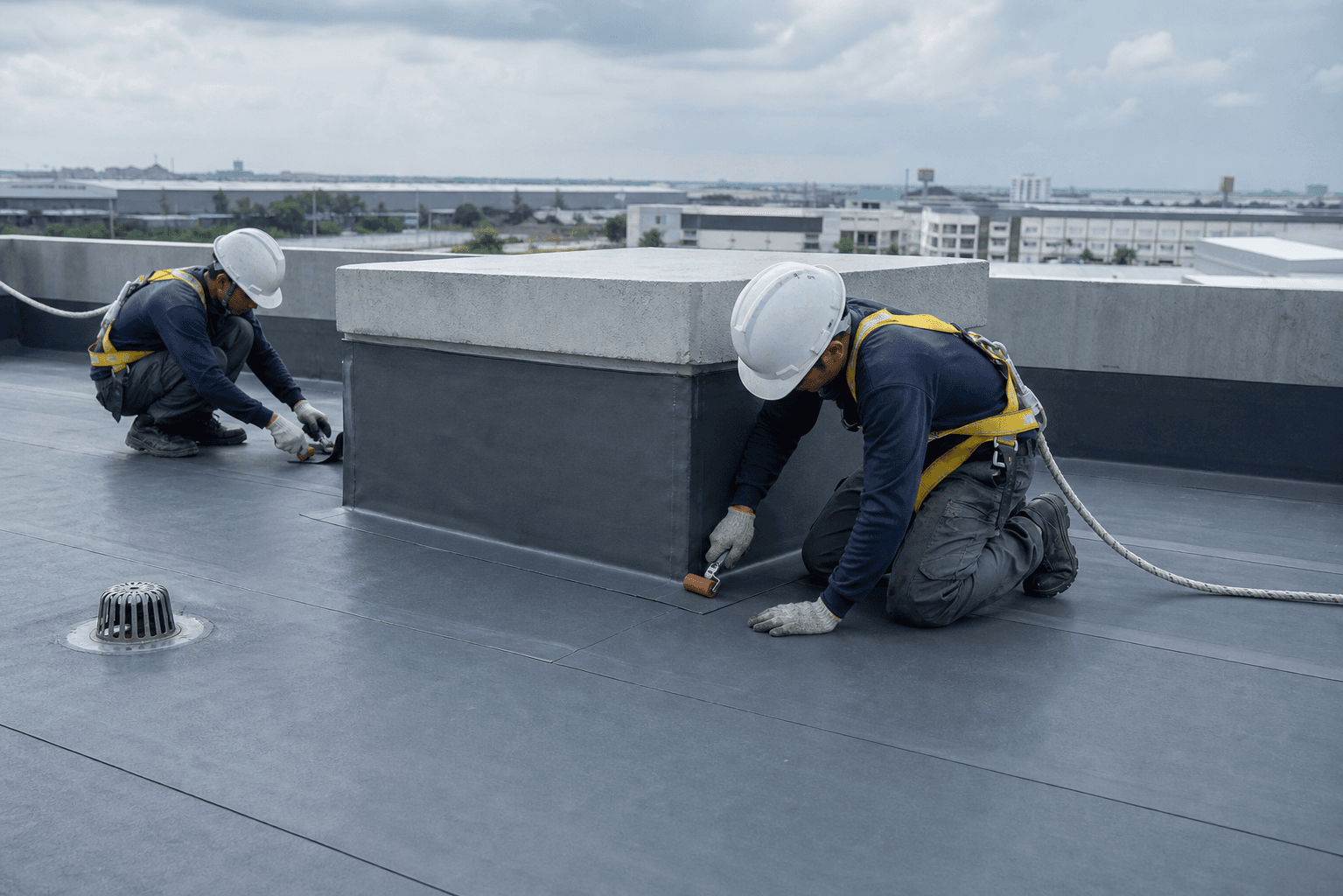
Protection systems selected after understanding the leakage source, water direction, structural type, joint details, and work access.
2
When Waterproofing is relevant
It may be discussed for roofs, concrete decks, basements, tanks, toilets, wet areas, walls, joints, leakage, or seepage.
- Leakage or seepage is visible in a building area
- Joints, penetrations, or area details require treatment
- Roofs, decks, basements, tanks, or wet areas face water exposure
- The water source and path must be traced before selecting a method
3
A symptom is not always the source
Damp staining or dripping water must be traced through exposed areas, pressure direction, substrate, cracks, joints, movement, drainage, and whether water ingress remains active.
4
System options
Membrane Waterproofing, Cementitious or Polyurethane Coating Systems, Injection Grouting, and joint and detail treatment are selected according to diagnosis.
- 1
Membrane Waterproofing
What it is
A membrane system for suitable areas and substrates.
When it may be relevant
It may be considered on surfaces that can be accessed and detailed for the system.
Condition to confirm
Exposure side, substrate, joints, drainage, and access must be confirmed.
- 2
Cementitious or Polyurethane Coating Systems
What it is
Water-protection coating systems selected for the area condition.
When it may be relevant
They may be considered for details and exposure suited to the system.
Condition to confirm
Substrate condition, movement, water pressure, and exposure influence selection.
- 3
Injection Grouting
What it is
An injection method for selected leakage paths or details.
When it may be relevant
It may be considered when diagnosis identifies a path that injection can address.
Condition to confirm
Active source, pressure direction, crack condition, and access require evaluation.
- 4
Joint and Detail Treatment
What it is
Treatment of joints, penetrations, and water-vulnerable details.
When it may be relevant
It is relevant when a local detail forms part of an identified water path.
Condition to confirm
Joint movement and its relationship with the main system must be confirmed.
5
What must be evaluated
The water source and path, positive or negative pressure, substrate condition, cracks, joints, structural movement, drainage, exposure, access, and service conditions must be reviewed.
This list provides input for professional evaluation; it is not a self-diagnosis tool.
- Water source, path, and timing
- Positive or negative water-pressure direction
- Substrate type and condition
- Cracks, joints, penetrations, and structural movement
- Drainage, exposure, and service conditions
- Whether water ingress remains active
- Accessible side and work boundaries
6
Typical benefits
A correctly diagnosed system can target leakage pathways and help reduce water-related deterioration.
- Targets an identified leakage path
- Helps reduce water-related deterioration
- Allows different details to use suitable methods
- Supports service-life protection when diagnosis and maintenance are appropriate
7
Application environments
Roofs, decks, basements, tanks, toilets, wet areas, walls, joints, and seepage-prone areas require an approach matched to their details.
- Roofs and concrete decks
- Basements and below-grade areas
- Tanks according to service condition
- Toilets and wet areas
- Walls and vertical surfaces
- Joints, penetrations, and seepage-prone areas
8
Execution sequence
The sequence starts with diagnosis and follows the agreed method and scope.
- 1
Source and path diagnosis
Symptoms, pressure direction, drainage, cracks, joints, and active sources are traced.
- 2
Area boundaries and access
The work side, details, access, and operational boundaries are confirmed.
- 3
Preparation and repair
The substrate and details are prepared and repaired when included in scope.
- 4
Detail treatment and system application
Details are treated and the system is applied according to diagnosis and specification.
- 5
Curing, inspection, and handover
Curing, agreed inspection or testing, documentation, and handover are completed.
9
Quality Control
Checks are performed at relevant stages according to the system and agreed scope.
- Substrate condition and readiness
- Cracks, joints, penetrations, and detail treatment
- Material identity and application stages
- Curing conditions according to the system
- Inspection or testing where relevant and agreed
- Area, process, and handover documentation
10
Diagnosis directs the solution
Treating symptoms without understanding the water source and path can produce an ineffective solution. Access, structural condition, and joint movement may also limit the suitable method.
11
Related solutions
Separate water-protection needs from structural evaluation or other surface requirements.
12
Prepare your consultation
Share the symptoms and area context to begin diagnosing the source and water path.
- Project location
- Affected area or element
- Area function and service conditions
- Symptoms, timing, and known water source or direction
- Approximate affected size
- Photos or video of the condition
- Access to the positive or negative side and operational constraints
- Target timing
- Repair history, drainage, cracks, joints, and movement
This information is an initial guide. System recommendations follow evaluation of actual conditions and the agreed scope.